The challenge of managing knowledge in modern education
When administrators or educators try to manage the sheer volume of academic policies, research papers, and student handbooks, they hit a wall of fragmentation. Information is buried in 50-page PDFs, outdated intranets, and scattered department wikis. For a student or faculty member, finding a specific answer—like the exact protocol for a grant application or a graduation requirement—often requires manual search or multiple emails to already-overburdened department heads.
The hidden cost of information silos
In an education setting, the cost isn't just time; it's institutional quality and SLA risk. When staff are interrupted 20 times a day with repetitive questions, high-level research and personalized student support suffer. Furthermore, providing incorrect information regarding compliance or financial aid can lead to significant legal and administrative gaps. As digital documentation grows, the gap between having the information and being able to use it widens.
Why standard tools fall short
Most institutions have tried to solve this with basic search tools or generic AI, only to find they aren't fit for purpose:
- Manual search and internal wikis: Keyword matching is too literal. If a student asks about "financial support" but the document says "bursary," basic tools fail.
- Generic AI (ChatGPT): These models are prone to hallucinations. In education, an AI making up a deadline or a policy isn't just unhelpful; it's a liability. Additionally, privacy for businesses and schools is a major concern when uploading private data to public models.
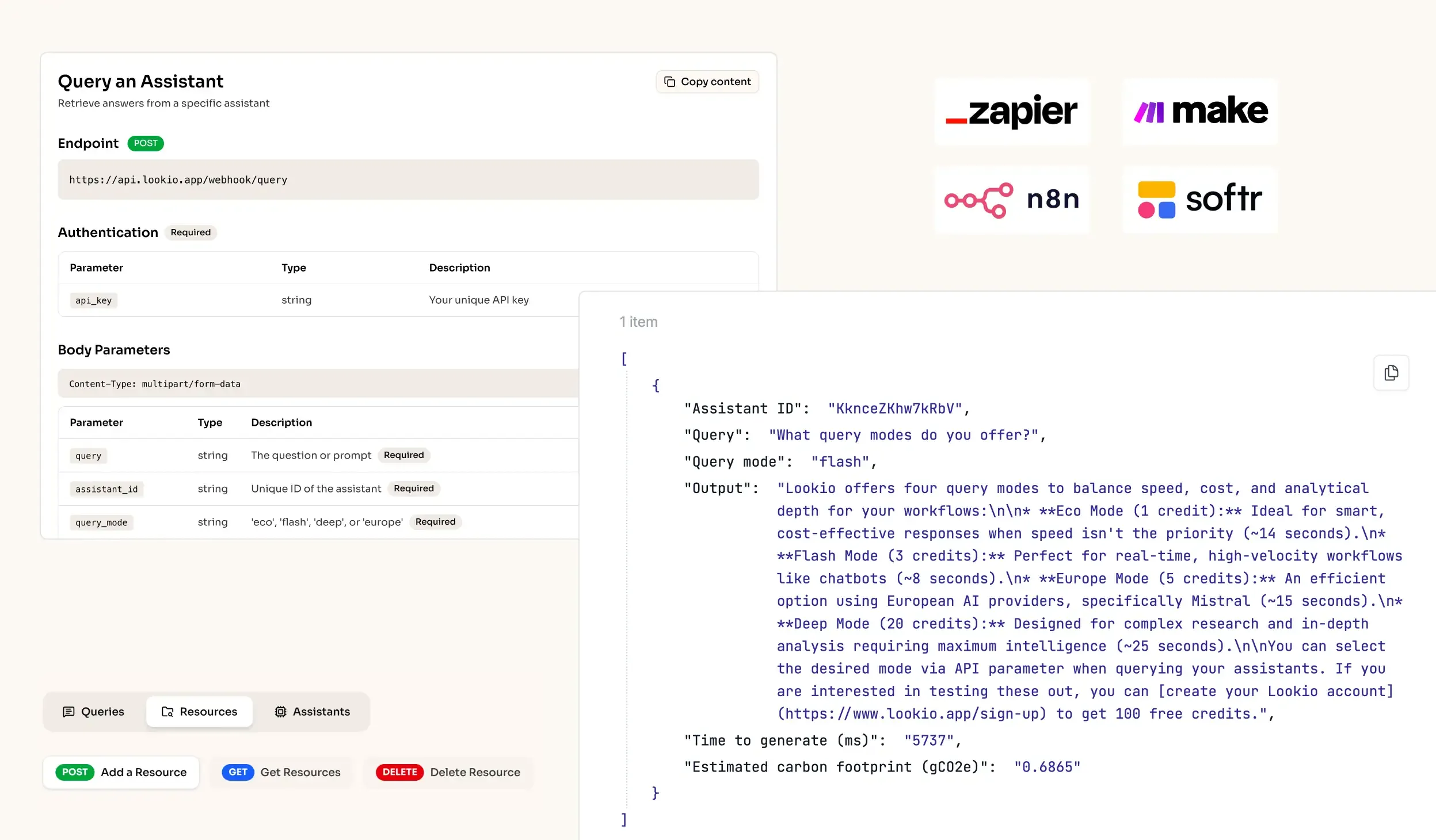
- NotebookLM and Custom GPTs: While great for individual research, they lack an API. You cannot automate workflows like syncing with your Student Information System (SIS) or deploying a universal campus bot.
What’s missing is a programmatic way to connect your institution's specific truth to an intelligent interface.