The challenge of knowledge retrieval in aviation
When an operations manager or safety officer tries to find a specific clause in an EASA regulation or a maintenance procedure across thousands of pages of manuals, they hit a wall of fragmented data. In aviation, the cost of an error isn't just a missed deadline—it is a critical safety risk and a massive operational bottleneck.
The high altitude cost of manual search
Traditional workflows in aviation are buckling under the weight of regulatory complexity. For every new aircraft model or international route, the documentation grows exponentially. When technical teams have to manually search through massive PDFs or internal wikis, the impact is felt across the board: delayed maintenance turnarounds, slower response times for AOG (Aircraft on Ground) situations, and an increased risk of failing an audit due to outdated information. Relying on an expert's memory to navigate these documents is a single point of failure that prevents scaling.
Why the tools you've tried fall short
You have likely attempted to solve this with standard search tools or basic AI, only to find they cannot handle the rigour of this industry:
- Standard PDF Search: Keyword matching fails when you need to understand the intent of a regulation. It cannot connect a technical symptom to a specific maintenance instruction if the exact wording differs.
- Generic AI (ChatGPT): Large language models hallucinate without grounding. In aviation, an AI "guessing" a torque specification or a safety threshold is a non-starter. Furthermore, uploading proprietary flight data into generic consumer tools is a significant data security breach.
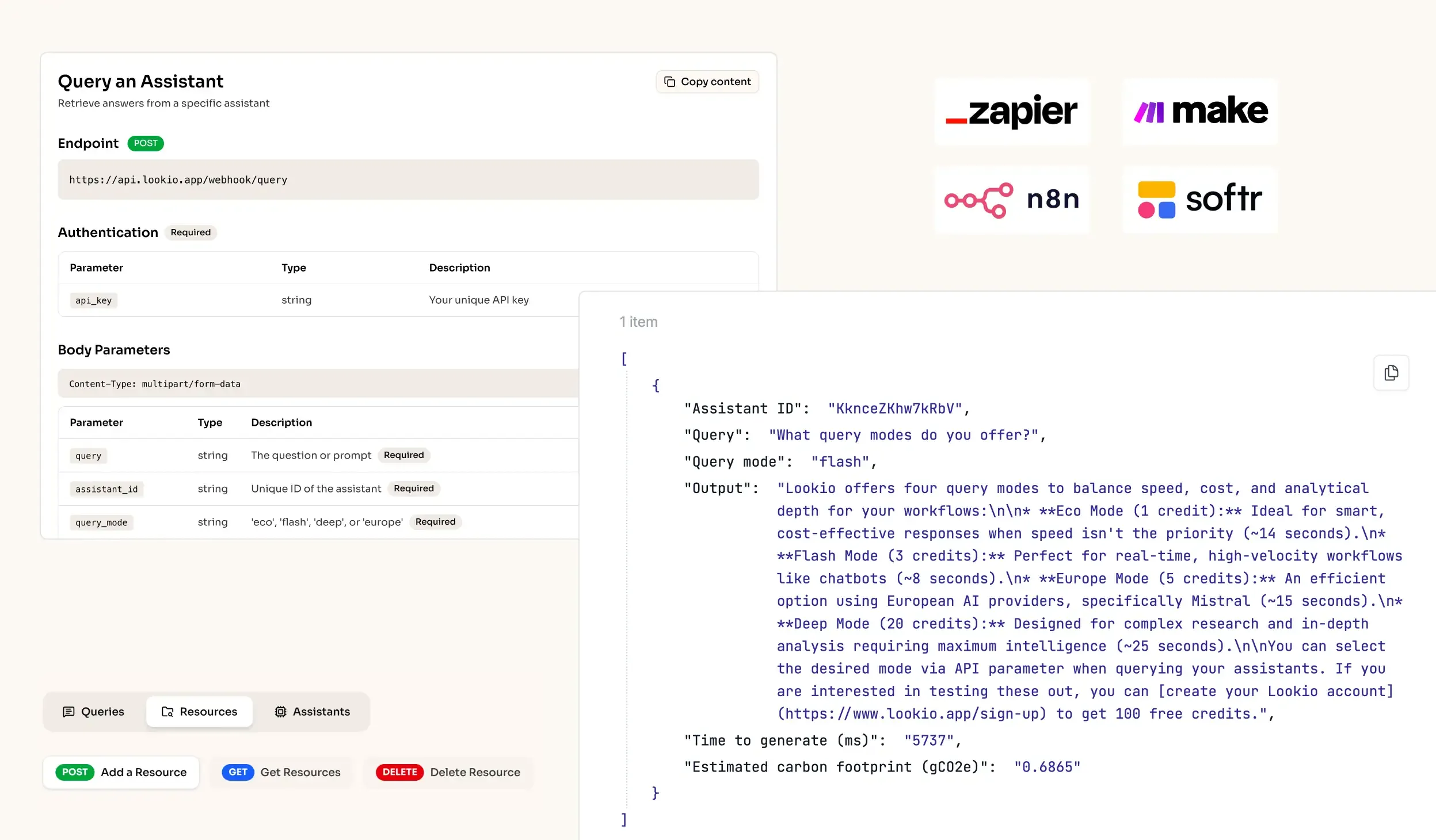
- No-API Tools: Solutions like Google NotebookLM are impressive for individual researchers, but they are useless for business operations. You cannot connect them to your maintenance software, your pilot messaging apps, or your automated compliance reporting.
What’s missing is a way to turn those massive technical libraries into a programmatic asset. You need a solution that is built for business-scale RAG and works within your existing digital infrastructure.