The challenge of fragmented knowledge in consulting
When a senior consultant tries to draft a high-stakes proposal or a new associate needs to audit a client’s historical data, they hit a wall of fragmented information. Your firm’s most valuable assets—white papers, past case studies, regulatory audits, and specialized research—are likely scattered across PDFs, internal drives, and obscure URLs.
The intellectual drain on senior partners
This isn't just a minor inconvenience; it's a scaling bottleneck. Every time a junior team member spends four hours hunting for a specific methodology or asking a senior partner for a previous project’s insights, the firm loses billable velocity. This leads to expert interruptions, inconsistent client deliverables, and eventually, the dilution of your firm’s unique methodology as people bypass documentation just to meet a deadline.
Why the tools you've tried fall short
Most firms have experimented with basic solutions, only to find they don't meet professional standards:
- Internal wikis and keyword search: These systems rely on matching exact words. If you search for "digital transformation" but the document discusses "legacy modernization," you find nothing. They simply don't understand semantic context.
- Generic AI like ChatGPT: While impressive, asking a public LLM about a confidential client strategy is a massive security risk. Furthermore, without being grounded in your specific documents, generic AI hallucinates facts, confidently making up statistics that put your firm’s reputation at risk.
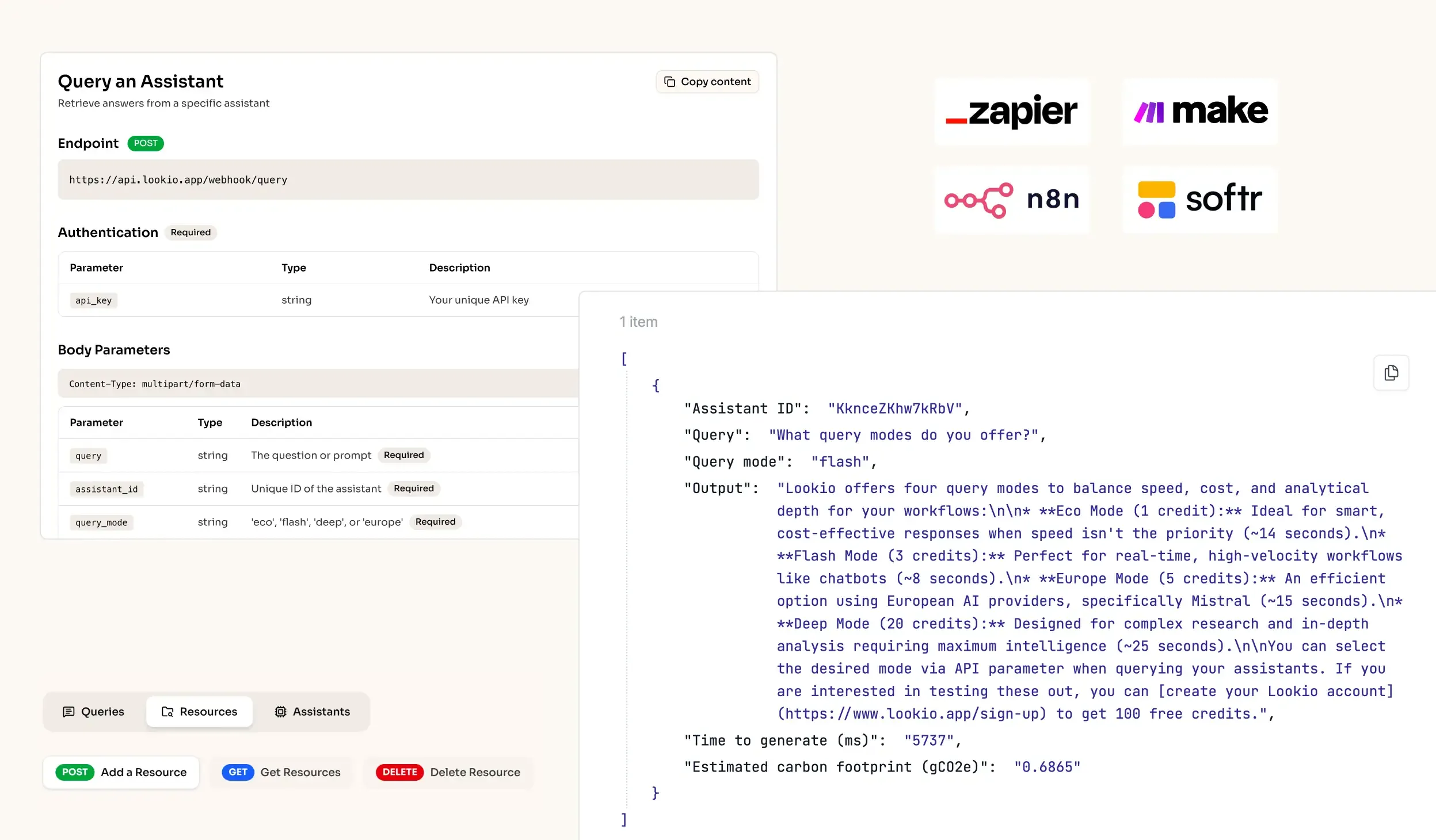
- NotebookLM or Custom GPTs: These tools provide better retrieval but are "walled gardens." For a consulting firm seeking to scale SEO content with AI or automate reporting, the lack of an API makes them impossible to integrate into a real production workflow.
What’s missing is a secure, API-first brain that turns your static archives into a live, billable resource.